April 2026 Google Review Policy Updates: What Businesses Must Know
In April 2026, Google reinforced and expanded its review policies, introducing stricter rules aimed at improving authenticity and reducing manipulation. These changes are already affecting how reviews are collected, displayed, and even removed. Businesses that rely on customer feedback for reputation and SEO need to adapt quickly.
1. Employee Name Solicitation Is Now Prohibited
One of the most notable updates is the restriction on mentioning or requesting specific employee names in reviews. Businesses can no longer encourage customers to “mention John” or “ask for Sarah in your review.”
Why this matters:
Google views this as a tactic that can bias reviews or create artificially positive feedback tied to individuals rather than the overall experience.
What to do instead:
Encourage customers to describe their experience naturally, without steering them toward naming staff.
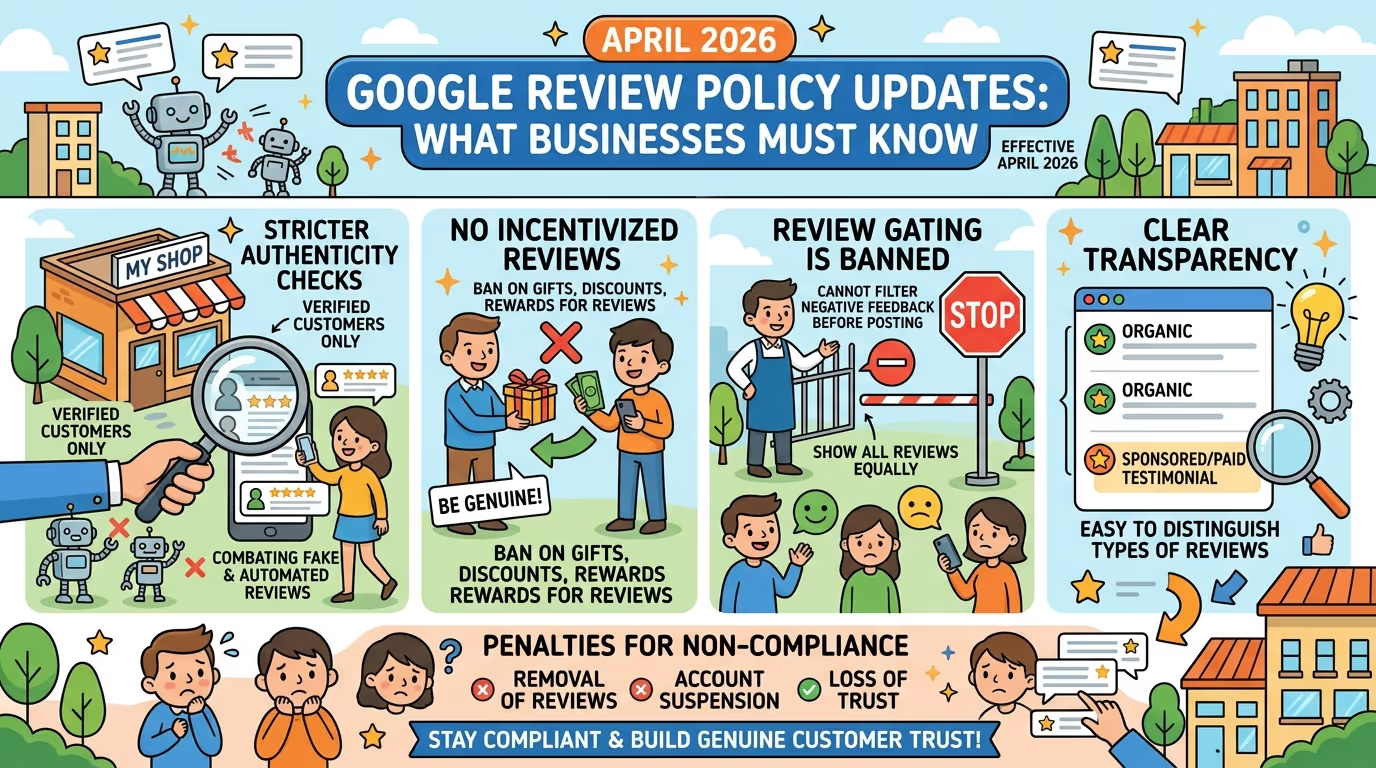
2. “Review Gating” Is Officially Banned
Review gating—filtering customers based on their satisfaction before asking for a review—is now explicitly prohibited.
Example of banned practice:
Asking happy customers to leave a Google review
Redirecting unhappy customers to a private feedback form
Why this matters:
This creates a distorted public perception, which violates Google’s authenticity standards.
Best practice:
Request reviews from all customers equally, regardless of their experience.
3. Incentivized Reviews Face Strict Limitations
Offering incentives in exchange for reviews—especially tying employee bonuses to 5-star ratings—can now trigger automatic review removal.
Implications:
Discounts, gifts, or rewards tied to reviews are risky
Internal staff competitions based on reviews may also be flagged
Recommendation:
Focus on delivering excellent service rather than rewarding review outcomes.
4. No More Review Templates or Scripts
Providing customers with pre-written templates or suggested wording is now against policy.
Why this matters:
Templated reviews reduce authenticity and are easier for Google’s AI systems to detect and remove.
Better approach:
Use neutral prompts like:
“We’d love to hear about your experience.”
5. Reviews Disabled for K–12 Schools
As first introduced in 2025 and continuing into 2026, Google has disabled reviews for general education institutions (K–12 schools).
Reason:
To prevent misleading, harmful, or inappropriate content targeting schools.
Impact:
Existing ratings have been removed
Schools can no longer collect public Google reviews
6. AI-Driven Enforcement Is Increasing
Google is now using advanced AI systems to detect policy violations in real time.
What businesses are seeing:
Sudden drops in review counts
Older reviews being removed retroactively
Increased filtering of suspicious content
Source: Google Business Profile Help documentation and ongoing updates to spam and fake engagement policies.
Key Takeaways for Businesses
Avoid On-Site Review Requests
Requesting reviews while customers are physically present can be flagged as coercive or pressured behavior.
Expect Automated Deletions
If your review strategy violates policies—even unintentionally—Google’s AI may remove reviews without warning.
Focus on Authentic Feedback
The safest and most effective approach is simple:
Ask all customers equally
Avoid scripts or incentives
Encourage honest, open-ended responses
Final Thoughts
Google’s 2026 updates signal a clear shift toward authenticity and transparency. Businesses that relied on aggressive review-generation tactics will need to pivot. Those that prioritize genuine customer experiences, however, are likely to benefit in the long run.
By aligning with these policies, you not only protect your online presence but also build more credible and trustworthy relationships with your audience.
How much business are your reviews costing you?